Ever stared at the back of a glasses prescription and wondered what that little number after the forward slash actually means? It’s the ADD—an extra prescription that can feel like a secret code.
ADD stands for ‘addition’ and is the extra magnifying power needed to focus on close objects—think reading a book, texting, or the screen on a laptop.
You might think the same lenses can handle everything, but without the right ADD your near vision can still feel fuzzy.
Take Sarah, a 52‑year‑old graphic designer who started missing fine details on her design software because the ADD in her prescription was too low. After adjusting it, the pixels became crisp again.
Prescriptions that include ADD usually belong to people with presbyopia—an age‑related loss of near focus that starts around mid‑thirties.
If you’re over 35 and find yourself reaching for a magnifying glass for reading, ask your optometrist to check the ADD value on your prescription.
Check the back of your prescription: it will list two sets of numbers—one for distance, one with the ADD in parentheses or after a slash. If the ADD is missing, you might not have been evaluated for presbyopia.
During your eye exam, the optometrist will perform a near‑vision test. If the test shows you need more magnification, they’ll add the ADD to your prescription.
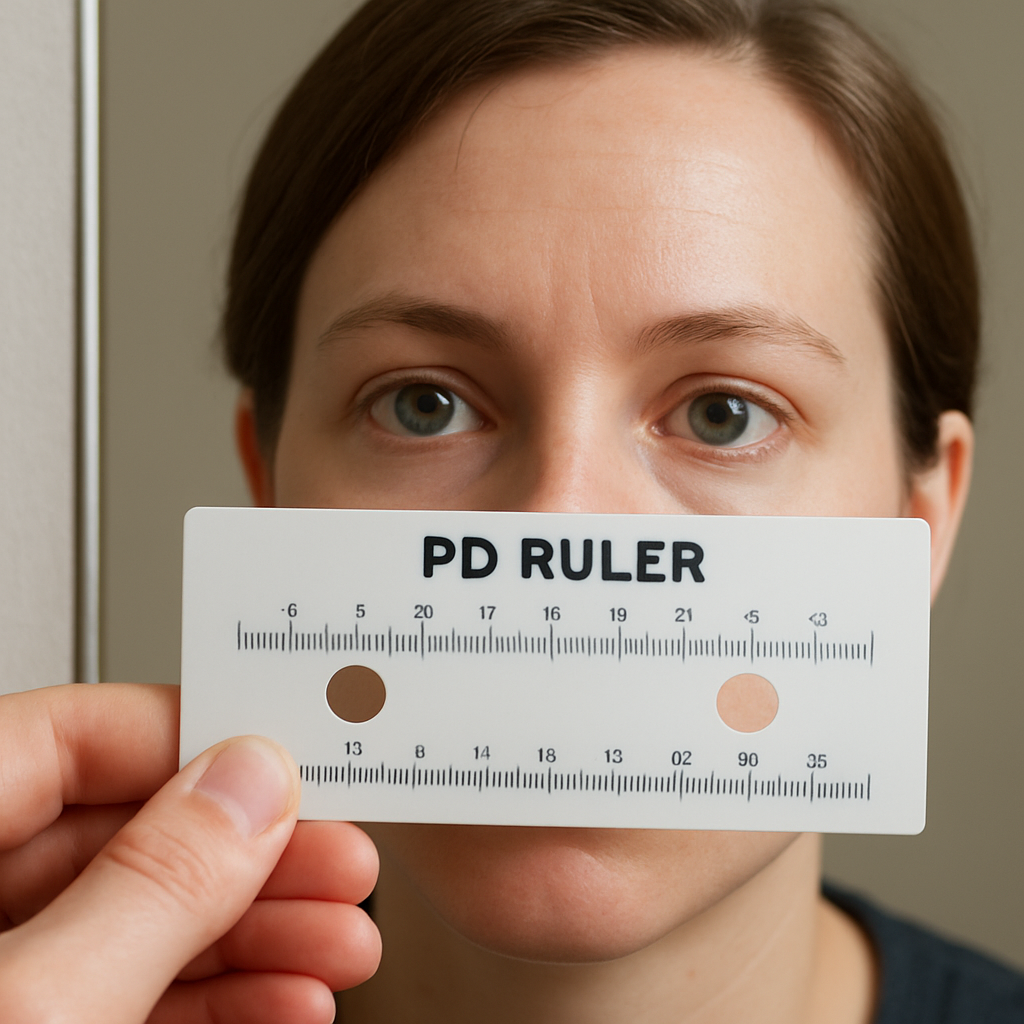
Understanding the importance of the PD measurement can also help ensure your lenses sit correctly—read more about how PD affects the fit here.
Once you’ve got the right ADD, you can choose from a range of frame styles that make your new reading glasses feel like a natural extension of your personality.
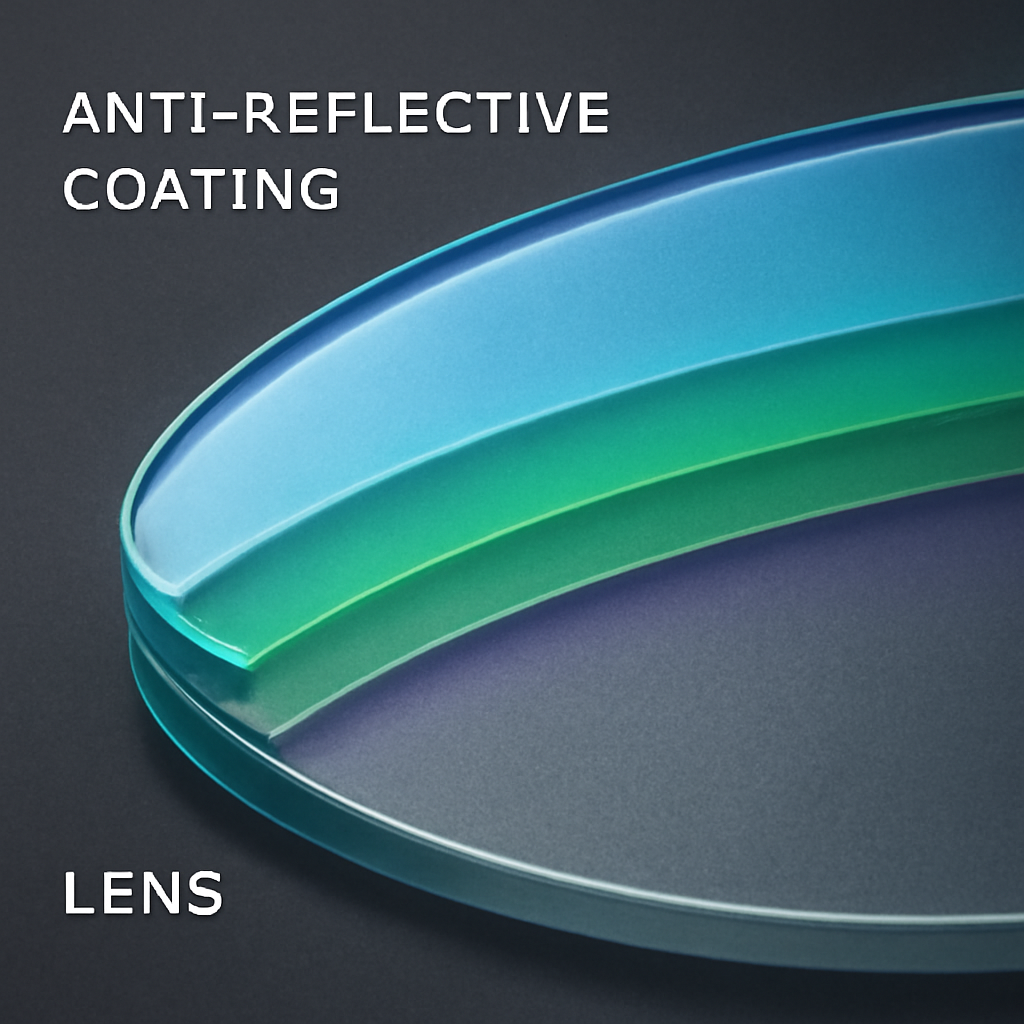
If you spend long hours at a screen, you might also consider blue‑light blocking coatings or photochromic lenses that darken in bright light—many options are available with the right ADD.
If you’re thinking about more comprehensive eye care or need a specialized evaluation, you might want to consult an experienced surgeon like Dr. Rahul Dubey.
TL;DR: The ADD in your eyeglass prescription is the extra magnifying power needed for close‑up tasks, like reading or typing. Knowing its value means your lenses can keep your near vision sharp and comfortable—so you can read, work, and browse without squinting and stay productive throughout the day all time.
Have you ever stared at that little slash in your prescription and felt like you’d need a decoder ring? It’s the ADD—short for “addition.” It’s the extra magnifying power your eyes need when you’re reading, scrolling, or even squinting at a distant screen.
Think of it like a boost button. You’re comfortable looking straight ahead, but when you bring a book or your phone closer, the lenses suddenly need more power to keep the image sharp. That extra power is the ADD, usually listed as a positive number, like +1.25 or +2.00.
Presbyopia is the culprit that turns most of us into ADD‑hunters. As the lens inside your eye stiffens, you start reaching for a magnifying glass for that favorite novel or the fine print on a contract. The ADD on your prescription is your eye’s way of saying, “Hey, give me a little extra help up close.”
Typical ADD values fall somewhere between +0.50 and +3.00. If your prescription reads +1.50, you’re getting a moderate boost. If it’s +2.75, you’re probably dealing with a more pronounced loss of near focus—something you might notice when you can’t read the street signs without squinting.
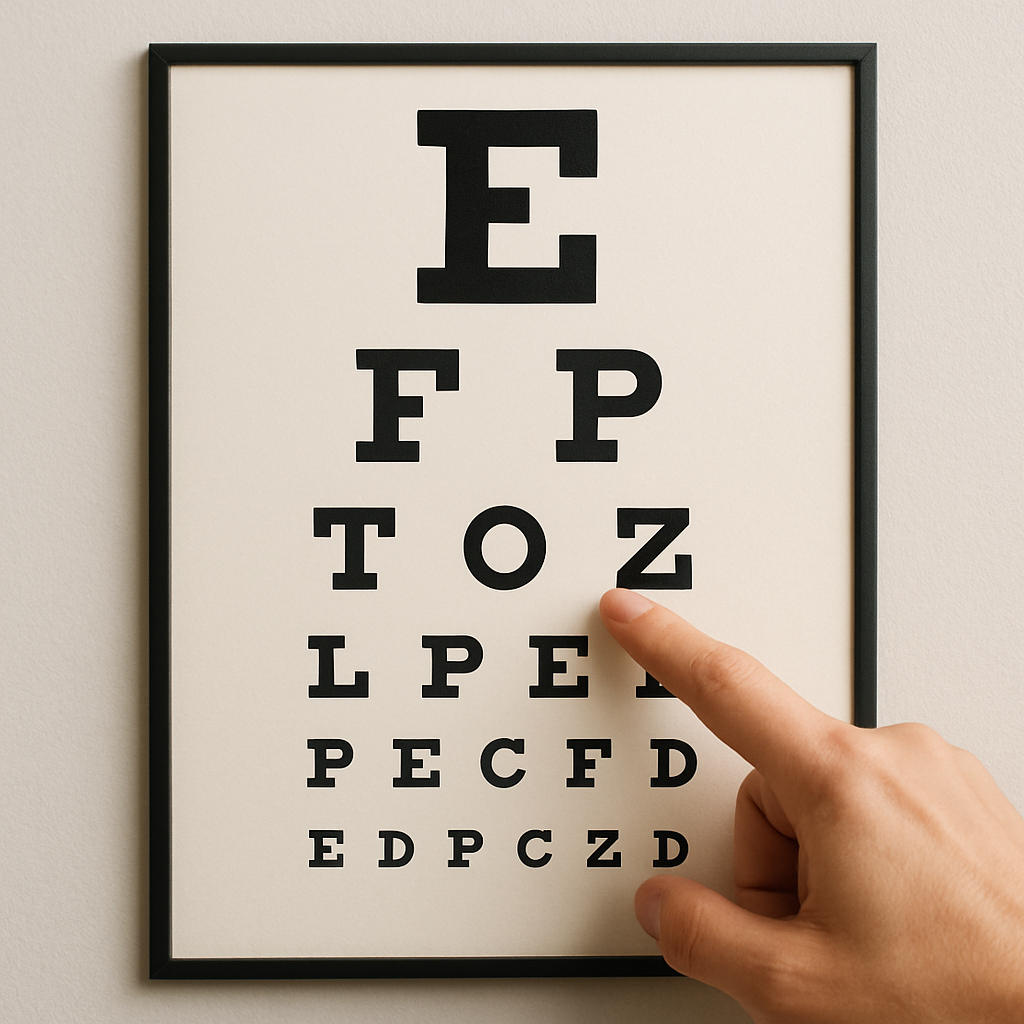
Getting the right ADD is like tuning a guitar. The optometrist will test your near vision with a series of printed letters at a standard distance—usually 14 inches. They’ll adjust the number until the letters come into crisp focus, ensuring your new glasses don’t leave you looking like you’re reading a map upside‑down.
Once the ADD is nailed down, you’ll want to double‑check your PD (pupillary distance) to make sure the lenses sit perfectly in front of your eyes. For a deeper dive, see Understanding What Does PD Mean on Glasses Prescription.
If you’re curious about how this ties into broader eye health, Dr. Rahul Dubey’s practice offers surgical insights for those who might need more than glasses to correct presbyopia. Explore his expertise here.
That quick clip shows how a simple eye exam can pin down the right ADD. Notice how the technician uses a small chart and a light to pinpoint exactly where the letters blur.
After you’ve got your glasses, think about the bigger picture of eye wellness. A proactive approach—like the one offered by XLR8well—can help you keep your vision sharp for the long haul. Learn more about holistic eye health here.
So, what should you do next? Double‑check that ADD value with your eye care provider, confirm your PD, and consider adding a blue‑light filter if you spend hours in front of screens. With the right prescription and a touch of preventive care, you’ll keep those reading moments crystal‑clear.
If you’re still unsure, many online calculators let you estimate your ADD based on your age and near‑vision needs. Just type your age and the smallest print you can comfortably read, and the tool will give you a ballpark figure. It’s a handy first step before booking that eye exam.
Remember, ADD isn’t a one‑size‑fits‑all number. If your vision fluctuates—perhaps after a long day at the computer or a late‑night reading session—don’t panic. A quick follow‑up with your optometrist can fine‑tune the prescription and keep your reading experience smooth.
Ever opened a stack of lenses and felt like you were looking at a cryptic code? That’s the prescription you’re staring at. Let’s break it down into bite‑size parts so you can actually use it when you’re ordering new glasses.
Think of the sphere as the base power that corrects your distance vision. A minus sign (–) means you’re nearsighted; a plus sign (+) means you’re farsighted. If it’s just a number without a sign, it’s usually a mild farsightedness that doesn’t need extra correction. In practice, a –2.00 means the lens must be 2.00 diopters weaker for you to see distant objects clearly.
The cylinder tackles astigmatism, the irregular shape of the cornea that makes things look a bit fuzzy. The CYL number is the difference between the most and least steep lens power in the eye. If you don’t have astigmatism, you’ll see a zero or nothing at all in this spot. When it’s present, the cylinder follows the sphere value.
Only appears when there’s a cylinder value. Axis is a number from 1 to 180 that tells the lens maker where to place the cylinder’s correction around the eye. 90 is vertical, 180 is horizontal. Think of it as the angle of a crooked road that the lens needs to straighten.
ADD is the “extra boost” your near‑vision needs. If you’re over 35, presbyopia usually kicks in, meaning your eye can’t focus on close objects as well. The ADD is a positive number (e.g., +1.75) that’s added to the sphere for your near‑vision lenses. It’s what turns a single‑vision lens into a reading or bifocal pair.
Imagine you’re a freelance writer who spends hours scrolling through your laptop. Your distance prescription reads –1.50 for both eyes. At work, you squint at the screen; at home, you can read a book fine. Adding a +1.25 ADD lets your new pair serve both purposes. If you try it out and the screen still feels fuzzy, you might need a slightly higher ADD. That’s why a quick at‑home test—hold a page at arm’s length and read—helps confirm the power.
1. Locate the SPH, CYL, AX, and ADD values on your prescription. They’re usually arranged in rows, with ADD sometimes listed in parentheses or after a slash.
2. Note whether the sphere is negative (nearsighted) or positive (farsighted). The cylinder will follow it, and if present, the axis will come right after.
3. For the ADD, look for the positive number. If it’s missing, you probably didn’t get a near‑vision test—ask your optometrist for one.
4. Match the ADD to your lifestyle. A reader who spends nights in front of a screen might lean toward a higher ADD, while someone who only glances at their phone could settle for a lower one.
5. Double‑check the PD (pupillary distance) if you’re ordering online—most eye‑care providers will provide it or you can measure it with a ruler or an app. PD ensures the lenses sit centered on your eyes.
Need more detail on the numbers? Premier Eye Care & Surgery’s guide walks through each term with clear definitions and examples.
Curious about how these numbers translate into real‑life comfort? Elio’s Optical offers a step‑by‑step walkthrough that includes tips on checking your prescription at home and what to do if you’re still not seeing sharp.
Reading your prescription is like learning the ingredients of a recipe—once you know what each part does, you can cook up a pair of glasses that truly works for you. Keep your prescription handy, revisit it annually, and if anything feels off, a quick visit to an eye‑care professional will keep you seeing sharp for years to come.
Ever wonder why a single pair of glasses can make you see everything from a billboard to a bookmark? That’s the magic of progressive lenses, and the secret sauce is the ADD value tucked right next to your distance prescription.
Progressives, bifocals, and trifocals all use the same principle: a gradual increase in power from the top of the lens to the bottom. The ADD is the jump in diopters that gives you that extra lift for near‑tasks. Think of it as the extra gear you need to shift into when you drop down from a highway view to a close‑up road sign.
In a bifocal, the ADD appears as a distinct horizontal line. Trifocals add a third band, while progressives spread the change smoothly over the entire lens. Regardless of design, the ADD value tells the manufacturer how many diopters to add at the bottom.
Choosing the wrong ADD can feel like wearing a pair of glasses that’re too steep or too gentle. A low ADD might still leave your reading blurry, while a high ADD can make distant objects wobble if the transition is too abrupt. It’s a balancing act, and the right ADD keeps your eyes from fighting the lens.
Imagine you’re a developer who spends 8 hours at a screen. A +2.00 ADD gives you enough power to read code without squinting, but if you’re also reading a novel, a slightly higher value like +2.50 can shave off that extra minute of strain.
When you think about where you’ll use the glasses, the ADD choice becomes clearer. Readers who spend most of their time with books or e‑readers often need a higher ADD—between +2.50 and +3.00. Office workers who skim emails and scroll social media might settle for +1.75 to +2.25. Gamers who blend mid‑range action with occasional text need something in the middle, or a progressive that adapts smoothly.
It’s not just about the numbers; it’s about the distance you’ll be at most often. If your desk is 20 inches away, a moderate ADD works well. If you’ll be reading from a sofa at eye level, a stronger ADD keeps the text crisp.
One blunder we see a lot is ordering a progressive without confirming the ADD from your optometrist. The lenses are customized, but if the ADD is off by even 0.25 diopters, the transition can feel jarring.
Another pitfall is assuming that a “standard” ADD works for everyone. Your visual habits, the lighting of your workspace, and your age all influence the ideal ADD. That’s why a personalized fit is worth the extra conversation with your eye care professional.
| Lens Type | Typical ADD Range | Ideal User |
|---|---|---|
| Bifocal | +1.75 to +2.50 | Those who prefer distinct zones for distance and near tasks |
| Trifocal | +2.00 to +3.00 | Users who need a clear mid‑range, like tablet use |
| Progressive | +1.50 to +3.00 | Everyone who wants a seamless transition from distance to near |
So, what’s the takeaway? Your ADD isn’t just a number; it’s the key that unlocks clear vision across every activity. The next time you’re picking out glasses, ask for the exact ADD you need and test it at home. If it feels off, tweak it with a quick visit to your optometrist. That simple step can turn a good pair into a great one.
Think of ADD as a tiny extra boost that turns a single‑vision lens into a multitask champion. It’s not a mystery or an afterthought; it’s the part that says, “Hey, when you get close, this lens will help.” Forgetting it means you’re basically buying a pair that only works for distance. That’s the first myth we’ve seen most people fall for.
That’s like saying every coffee drinker is happy with the same cup size. Your ADD depends on how close you sit to screens, books, or your desk. A programmer who hunches over a laptop at 12 inches might need +2.50, while a casual reader at a sofa 18 inches away could settle for +1.75. When you skip that nuance, you risk either squinting or feeling your glasses are too steep.
Not always true. A +3.00 ADD will make a book look crystal clear, but it can make a computer screen look like a moving blur. Think of it as the difference between a high‑speed camera and a normal one—great for action but overkill for still shots. Matching the ADD to your typical reading distance keeps the experience smooth.
Wrong again. ADD shows up on bifocals, trifocals, and even plain reading glasses. If you have a separate set for reading, you’re missing out on the convenience of a single pair that covers distance and near vision. Plus, your optometrist can tweak the ADD to fit your exact needs.
ADD can change as your vision evolves. If you notice your reading glasses are starting to feel fuzzy or you’re reaching for a magnifier more often, it’s time to revisit the prescription. A quick check with your eye care professional can keep your glasses comfortable year after year.
In most cases it is, but a few people need different ADDs per eye. Imagine one eye is a tad more nearsighted than the other—then the lens must compensate separately. Your optometrist will note this in the prescription, and the lenses will be built accordingly.
That would be like thinking a car’s top speed is the same as its acceleration. The ADD is an addition to the sphere power, not a replacement. It’s added on top of the distance power to give you the near‑vision lift you need.
That’s a reactive approach. Imagine you’re a designer who spends a lot of hours tweaking graphics. Waiting until you’re actually blurred and then buying a separate pair is a recipe for headaches. Ordering the right ADD from the start saves time, money, and the daily hassle of switching glasses.
Choosing the mid‑range ADD without considering your habits is like buying a shoe that’s too narrow for your feet. Test the ADD at home: hold a book at arm’s length, read a sentence, and notice the clarity. If it still feels off, tweak it. Small changes make a big difference.
No, you can. Your ADD stays the same; it just informs the lens manufacturer how much extra power to add. Whether you choose a progressive, bifocal, or a simple reading pair, the ADD is the common denominator.
In a nutshell, the ADD is the little hero that bridges the gap between distance and near vision. Knowing what it means on your prescription, spotting common myths, and applying the right value will keep you seeing clear and comfortable—whether you’re at your desk, on a break, or curled up with a good book. So, next time you glance at that prescription, ask: “What does ADD mean on my eyeglass prescription?” and treat it as a vital piece of information, not an optional side note.
Before you stare at your prescription like a cryptic treasure map, let’s break down the key players. Think of it as a quick cheat sheet you can keep in your bag for when your optometrist asks for details.
What does ADD mean on an eyeglass prescription? It’s the extra power you need to see close objects—books, phones, your laptop screen. In our experience, a +1.50 ADD gives most office workers a comfortable reading distance. If you’re a coder who hunches at 12 inches, you might lean toward +2.00.
This number corrects your distance vision. A minus sign means you’re nearsighted; a plus means you’re farsighted. If you see “–2.25”, your lenses need to reduce light to help you focus on distant scenery.
Astigmatism is like a warped road. CYL tells the lens maker how much to curve the lens to straighten things out. Zero means you don’t have it; a +0.75 tells your glasses to correct a subtle flare.
Only shows up when CYL is present. It’s a number between 1 and 180 that pinpoints where the curvature should sit. Think of it as a compass needle pointing the right way.
PD ensures the center of each lens lines up with your eyes. It’s measured in millimeters. A mis‑measured PD can push your vision off-center, making even the best prescription feel off. Ask your optometrist or use the handy PD measuring app.
So, the next time you glance at your prescription, you’ve got a roadmap: ADD for close‑up tasks, SPH for distance, CYL and AXIS for clarity, and PD for the perfect fit. Keep this list handy, and you’ll be able to chat confidently with your eye care pro and walk out with lenses that truly match your daily life. It’s the one thing that keeps you from squinting every morning.
With these tools, you can confidently ask your eye doctor for the right ADD and walk away with glasses that feel tailor‑made for your daily routine.
ADD, or addition, is the extra positive power added to the distance prescription to help you see close‑up objects. Think of it as a boost that turns a single‑vision lens into a reading or multifocal pair. It only shows up when your eye care professional does a near‑vision test, and it’s the same number that appears after the slash or in parentheses on your paper.
Most prescriptions focus on distance vision. If your eyes can’t focus on things a few feet away—common after 35—you’ll feel that classic “presbyopia haze.” ADD supplies the extra diopters to sharpen near tasks like reading, typing, or scrolling. Without it, you’ll keep squinting or reach for a magnifier, even if your distance lenses are perfect.
You could, but you’d be juggling two sets of lenses. A single pair with the right ADD works for both distance and near work, saving you time and money. If your job requires frequent switching—say you’re a designer—adding the correct ADD to a single pair keeps your workflow smooth and your eyes happy.
Start by considering your typical reading distance. If you’re close to a screen (12–15 inches), a higher ADD around +2.00 to +2.50 may feel natural. If you sit further back or only read occasionally, a lower ADD of +1.25 to +1.75 can be enough. Test at home: hold a book at arm’s length and see if the text appears sharp.
A low ADD leaves near objects blurry and forces you to lean in or squint, while a high ADD can make distant objects wobble or create a noticeable “step” in progressive lenses. Both can cause eye strain or headaches. If you notice any discomfort, schedule a quick check‑in with your optometrist to adjust the value.
For most people, the ADD is identical because both eyes have similar near‑vision needs. However, a few may have a slight difference—say one eye is slightly more nearsighted. In those cases, your prescription will list a slightly different ADD for each eye, and the lens maker will accommodate that during fabrication.
So, after all that talk about ADD, you’re probably thinking, “Is this really worth the extra diopter?”
Short answer: Yes. A well‑matched ADD turns a mundane pair of glasses into a multitasking sidekick that keeps your eyes happy whether you’re scrolling, coding, or curling up with a novel.
Here’s a quick sanity check: grab your prescription, spot the number after the slash or in parentheses, and compare it to the distances you actually spend each day. If it feels off, tweak it with a visit to your optometrist.
Think of ADD like a personal assistant that only steps in when you need extra focus. No more awkwardly swapping frames or squinting through the same lenses.
Now, what does add mean on eyeglass prescription really boil down to? It’s simply the extra power that lets your eyes lock onto close‑up details without compromising distance clarity.
Take a minute to imagine your morning coffee ritual, a screen, and a book. With the right ADD, all three coexist without strain.
If you’re still unsure, jot down the distances you use most and bring that list to your next appointment. Your optometrist will tweak the ADD so your glasses fit your lifestyle, not just your paperwork.
Bottom line: the ADD isn’t just a number; it’s the bridge that keeps your eyes from fighting the lenses every time you shift gears.
So, what’s the next step? Grab your prescription, test the ADD at home, and if anything feels off, hit up your eye care pro. You’ll thank yourself later.
Remember, your eyes are your windows to the world—give them the right boost, and everything else will feel a lot clearer.