Ever looked in the mirror, tried a few frames, and felt like the glasses just weren’t speaking your language?
Maybe you’ve noticed that certain styles make your round face look a bit wider, while others seem to balance everything out like a perfect photo filter.
We get it, finding the best eyeglasses for round face men can feel like hunting for a needle in a haystack, especially when every store seems to shout the same “one‑size‑fits‑all” vibe.
But here’s the thing: it’s not about chasing trends; it’s about understanding a few simple shape tricks that instantly sharpen your look.
Think about the last time you wore a pair of rectangular frames that gave you a subtle edge, or a sleek cat‑eye silhouette that adds a touch of contrast. Those moments happen because the lines of the frames create visual balance, pulling the eye away from the natural curves of a round face.
So, what should you keep an eye on? First, look for frames that add height—think square, rectangular, or way‑farmer styles. Second, choose a wider bridge to avoid the “bridge‑to‑nose” squeeze that makes the face appear broader. And third, consider a slight angle or a bold color to draw attention where you want it.
In our experience at “BuyEyeglass”, we’ve seen men transform their everyday vibe just by swapping a soft‑rounded pair for a structured, angular frame. It’s a tiny change with a surprisingly big payoff—more confidence at work, smoother selfies, and fewer “Do those glasses make my face look…?” moments.
Ready to ditch the guesswork? We’ll walk you through the top frame families, the materials that hold up under daily hustle, and quick fit hacks you can try at home. By the end, you’ll have a clear game plan for picking the best eyeglasses for round face men without the overwhelm.
Let’s dive in and give your face the shape‑boost it deserves.
If you’ve struggled to find the best eyeglasses for round face men, focus on angular frames, wider bridges, and bold accents to add height and balance. Follow our quick guide to spot the right styles, test fit at home, and upgrade your look with confidence in just minutes, today, easily.
When you’ve got a round face, the first thing you notice is the way the soft curve of your jaw can make a pair of rounded glasses feel like a mirror. Classic wayfarer frames are the antidote – they add straight‑line contrast, a hint of retro swagger, and just enough edge to make your face look a touch longer.
So, what makes a wayfarer the go‑to choice for the best eyeglasses for round face men? Let’s break it down, point by point.
Wayfarers sit somewhere between a square and a rectangle. The angular top bar creates a visual line that “cuts” the roundness, giving the illusion of height. Think of it like a picture frame that straightens a soft‑edged portrait – it balances the composition.
And because the corners are not too sharp, they stay friendly enough for everyday wear. You won’t feel like you’re walking around with a piece of geometry glued to your nose.
A wider bridge spreads the weight across the nose, preventing that dreaded squeeze that can make a round face look even broader. In our experience at BuyEyeglass, clients with broader noses love the way a flared bridge feels like a gentle hug rather than a clamp.
Need a quick visual? Round eyeglass frames for men often showcase the opposite problem – narrow bridges that pinch. Wayfarers flip the script.
Acetate gives you that classic, matte finish that ages beautifully; metal adds a lightweight feel for all‑day comfort. If you’re the type who forgets you’re even wearing glasses, the lighter the frame, the better the “invisible” vibe.
Pro tip: look for a subtle texture on the acetate – it adds personality without shouting.
Classic black or tortoise are safe bets, but a deep navy or muted olive can add a pop of colour without clashing with most wardrobes. A thin contrasting stripe along the temple can also draw the eye outward, further balancing roundness.
And if you’re feeling bold, a glossy finish can reflect light and create a sleek, modern twist on the retro silhouette.
Even the perfect wayfarer needs a tiny adjustment to sit just right. Warm the temples with a hair‑dryer for a few seconds, then gently bend them outward for a looser fit. If the nose pads feel tight, a quick pop of a tiny pad can give you that extra wiggle room.
For a deeper dive on adjusting nose pads, check out how to adjust nose pads on glasses – it’s a lifesaver.
Now, you might wonder whether you need a professional eye exam before you pick a wayfarer. Absolutely. A solid prescription ensures you see clearly, and an eye surgeon can spot any underlying issues you might not notice.
For trusted advice, consider a quick consult with eye surgeon Dr Rahul Dubey. He can confirm your prescription and help you pick the right lens type for your lifestyle.
Pairing your new frames with the right accessories can elevate the whole look. A sleek metal watch or a minimalist bracelet works well, but if you want to add a touch of sparkle, a subtle piece from DiamondVeneer’s fashion jewelry collection can complement the angular vibe without overwhelming it.
Watch the video above for a quick style demo: see how different wayfarer shades sit on various round‑face shapes and get a feel for the right bridge width.

Picture this: you’re scrolling through a sea of frames and a pair of aviators catches your eye. The teardrop lenses look sleek, the metal bridge feels light, and you’re wondering if they could be the secret weapon for your round face.
We’ve all been there – the moment a style feels right but you’re not sure it’ll actually flatter the natural curves of your face. Aviators with soft edges are a happy middle ground. They keep the classic pilot vibe while offering a gentler silhouette that doesn’t scream “boxy.”
The key is the subtle curve. Unlike the deep, angular teardrop of a traditional aviator, the softened version tapers a bit more at the bottom, creating a visual lift without adding bulk. That extra lift elongates the face, making the cheeks look a touch slimmer.
According to the aviator vs wayfarer vs round guide, the smooth curve of aviators offsets angular or boxy features, while the wide top bar balances broader foreheads. Flip that logic, and you see why the softer curve can tame roundness – it adds a hint of contrast without overwhelming the natural shape.
1. Go metal, but think texture. Brushed nickel or gunmetal adds a bit of grit without the shine that can highlight roundness.
2. Choose a slightly narrower frame width. Aim for a width that matches the distance between your cheekbones – not wider. That prevents the frames from pushing your face outward.
3. Play with lens colour. Gradient lenses draw the eye upward, creating the illusion of height. Darker at the top, lighter at the bottom works wonders.
4. Mind the bridge. A straight or subtly angled bridge keeps the glasses sitting higher on the nose, which adds that coveted vertical line.
5. Pair with a low‑profile nose pad. Soft silicone pads hug the nose without creating a “bridge‑to‑nose” squeeze that can make the face appear wider.
Does any of that feel like a lot to juggle? Not really – you can test these tweaks at home with a simple mirror check.
If you can answer “yes” to all three, you’ve probably found a winner.
While the video walks you through the classic aviator silhouette, keep in mind the softer edge variations we’re talking about here – they’re a subtle but powerful tweak.
| Feature | Traditional Aviator | Soft‑Edged Aviator |
|---|---|---|
| Lens shape | Deep teardrop | Gentle taper, less extreme |
| Bridge style | Wide double bridge | Straight or slightly angled |
| Best for round faces | May exaggerate fullness | Creates lift, softens roundness |
Imagine you’re on a coffee run, and someone asks, “Where did you get those glasses?” You can confidently say you chose a soft‑edged aviator because it adds a sleek, elongated vibe without hiding your natural face shape.
Bottom line: soft‑edged aviators give you the classic pilot swagger while subtly balancing a round face. They’re a win‑win for anyone who wants style, comfort, and a touch of visual elongation.
When you slip on a pair of square frames with a whisper‑thin rim, there’s an instant sense of structure that your round face has been craving. The clean angles slice through the softness of full cheeks, while the lightweight border keeps the look feeling breezy rather than boxy.
Why do thin‑rimmed squares work so well? First, the square shape introduces vertical lines that visually lengthen the face. Second, the slim metal or acetate edge avoids adding bulk, so the frames sit close to the skin and don’t push your cheeks outward. In short, you get definition without the “helmet” feeling.
Let’s bring it to life with a couple of real‑world scenarios. Tom, a 29‑year‑old graphic designer in Melbourne, used to wear rounded plastic frames that blended into his face. After trying a matte‑black square frame with a 1 mm metal rim, his colleagues started commenting on the “new, more defined look.” The change was enough that his Zoom background suddenly felt less “self‑conscious” and more “professional.”
Sam, a university student studying engineering, needed glasses that could survive a packed backpack and a hectic schedule. He chose a brushed‑silver thin‑rim square pair that cost under $50. The frames held up through a semester of field trips, and the angular lines helped his facial features appear slimmer in group photos, which he says boosted his confidence on campus.
So, how do you pick the perfect thin‑rim square for your round face? Follow these five steps, and you’ll be able to judge a pair in minutes, even before you try them on.
Here’s a quick checklist you can print and keep on your bathroom counter:
Expert tip: If you’re on the fence about thickness, try a “semi‑rimless” version where the top edge is thin but the bottom frame is a subtle line. It gives you the same angular boost while staying ultra‑light.
And remember, the best eyeglasses for round face men aren’t about chasing every trend – they’re about finding that sweet spot where geometry meets comfort. Square frames with thin rims deliver exactly that: a sleek, modern silhouette that quietly reshapes your face without shouting for attention.
Ready to give your look a lift? Grab a pair, run the quick fit checklist, and see how a few well‑chosen angles can change the whole vibe.
So you love the vibe of a round shape but your face is already doing its own circle‑party? No worries – there are plenty of frame families that give you that soft‑edge feel without actually adding more roundness. Below are the top round‑frame alternatives that keep the look relaxed while still giving a round‑face man the lift he’s after.
Think of an egg‑shape that’s just a touch wider than a true circle. The gentle curve adds length to the cheekbones, so your face looks a bit more rectangular without feeling harsh. In practice, the longer vertical line of an oval frame draws the eye upward, creating the illusion of a slimmer jaw.
Real‑world example: Alex, a freelance photographer from Melbourne, swapped his classic round glasses for a matte‑olive soft‑oval pair from a local boutique. He told us the frames “still feel laid‑back, but my selfies stopped looking like a pancake.”
Action steps:
These frames keep the top rim thin while the bottom is just a subtle line or even no rim at all. The effect is a floating lens that adds just enough structure to break up the roundness, but not enough to look “boxy.”
Imagine Sam, a university student who’s constantly on the move. He chose a brushed‑silver semi‑rimless pair that survived his backpack‑crushing days. The lenses sit high, giving his face a slight “lift” that makes his cheekbones pop in group photos.
How to test: Hold the glasses up; the top should rest just above your eyebrows, and the bottom line should be no thicker than 1 mm. If the lenses feel like they’re sliding down, look for a slightly wider bridge.
Browlines are a throwback to the 1950s but they’re back because the bold upper bar creates a built‑in “eyebrow lift.” For a round face, that heavy top line balances the soft curves and adds a masculine edge.
Take Marco, a bar manager in Sydney, who paired a dark‑tortoise browline with a crisp white shirt. He says the frames “make my face look more angular, and I get compliments on the vintage vibe.”
Quick checklist:
Cat‑eye isn’t just for women – a subtle cat‑eye with a softer angle works wonders for men with round features. The upward sweep at the outer corners adds height, while the rounded inner corners keep the feel gentle.
Jared, a graphic designer, tried a deep‑blue cat‑eye with a low‑key angle. He noticed that the frames “lifted my eyes and made my forehead appear a bit longer,” which helped his video‑call confidence.
Fit tip: The outer tip should not extend past the edge of your face; it should point just enough upward to create a visual line.
Hexagons and octagons introduce more angles than a pure circle, but the softened corners keep the look approachable. The extra vertices draw attention away from the cheeks and toward the centre of the face.
Real‑life scenario: Liam, a teacher, bought a light‑grey hexagonal frame with a thin metal rim. He tells us the frames “feel intellectual and the geometry makes my face look a bit narrower when I’m standing in front of a class.”
What to look for:
Transparent or lightly tinted frames act as a visual “invisible” frame, subtly breaking up the roundness without adding visual weight. The transparency keeps the focus on your eyes rather than the frame itself.
One of our customers, Ethan, swapped his bold black rounds for a clear‑acetate pair during the summer. He says the glasses “feel airy and still give a hint of structure that stops my face from looking too soft.”
Pro tip: Pair transparent frames with a darker lens tint for outdoor use; the contrast maintains the slimming effect while protecting your eyes.
All these alternatives share a common thread: they give you the relaxed vibe of a round frame but add just enough line or angle to create balance. Grab a pair, run the quick mirror test we’ve used before, and see which style feels like it’s “made for you.”

Alright, you’ve tried the classics and the soft‑edged aviators – now it’s time to look at what’s fresh on the market. Modern rectangular frames blend sleek geometry with lightweight materials, giving you the sharp edge you need without feeling like you’re wearing a construction helmet.
Think of a pair that’s barely there, like a whisper of steel on your nose. The thin rim keeps the silhouette low‑key, while the rectangular shape adds the vertical lines that slim a round face. Because the metal is so light, you can wear them all day at the office or on an arvo coffee run without the usual pressure on the temples.
Pro tip: look for a bridge that sits just a millimetre higher than the natural ridge of your nose – that tiny lift makes a huge difference in how elongated your cheekbones appear.
Matte acetate gives you the boldness of a solid colour without the shine that can emphasize roundness. The blocky corners create a clear visual contrast, pulling the eye up toward the eyebrows. Plus, acetate is forgiving; it bends a little if you’re a bit clumsy, so those accidental drops won’t crack the frames.
Imagine grabbing a dark‑olive matte block while you’re heading to a weekend market in Bondi – the colour grounds your look, and the shape adds a crisp line that keeps the roundness in check.
These have a thin outer rim and a slightly thicker inner line, giving the illusion of depth. The double layer tricks the eye into seeing more geometry, which is perfect for men who want a subtle statement. The inner line can be a contrasting tint – think charcoal outer with a gun‑metal inner – adding a hint of personality without shouting.
We’ve seen a lot of our Sydney customers pair these with a crisp white shirt; the frame’s shadow effect makes the outfit look more put‑together, especially on video calls where the camera loves clean lines.
Spring hinges are the unsung heroes of modern rectangles. They let the arms flex slightly, so the frame stays snug even if you have a broader bridge. The flexibility means you won’t feel the “pinch” that older rigid rectangles sometimes cause, and the rectangular shape still does its job of adding definition.
If you’re into outdoor activities – hiking the Blue Mountains or a quick surf session – the spring hinge keeps the glasses from snapping off when you bump your head on a branch or a surfboard fin.
Combine a clear acetate base with a faint tint (grey, amber, or even a muted teal). The transparency keeps the frame light, while the tint adds a subtle colour wash that breaks up the roundness without adding visual weight. It’s like wearing a pair of glasses that hug your face rather than sit on top of it.
One of our regulars in Melbourne told us the hybrid gave him “that low‑key vibe for the office and the beach” – a rare win‑win for a round‑face guy who can’t decide between corporate and casual.
Give one of these styles a spin, run the mirror test we’ve been using, and notice how the angles carve a little extra height into your look. That extra lift is exactly what makes a pair the best eyeglasses for round face men in today’s market.
Bottom line: modern rectangular frames aren’t just a trend; they’re a practical tool to balance roundness, boost confidence, and keep you comfortable from the morning commute to the evening out.
So there you have it – the best eyeglasses for round face men aren’t a mystery, they’re a handful of smart shape choices that add a little lift and a lot of confidence.
Remember the rule of thumb: pick frames that are at least as wide as your cheekbones, keep the bridge sitting just above the nose ridge, and let the top edge hover over your brows. Whether you gravitate toward a sleek modern rectangle, a thin‑rim square, or a soft‑edged aviator, the goal is the same – create vertical lines that trick the eye into lengthening the face.
And here’s a quick cheat sheet you can keep in your phone: width ≥ cheekbones, straight or slightly angled bridge, top edge ≥ eyebrow line, feather‑light feel after an hour. If a pair checks those boxes, you’ve likely found a winner.
What’s the next step? Grab a couple of styles you liked, run the mirror test we’ve been using, and walk out of the shop feeling like you’ve just upgraded your look without the guesswork.
At BuyEyeglass we’re always happy to answer any lingering questions – just drop us a line and let us help you lock in the perfect pair.
Enjoy your new look!
Think of shapes that add a little height and contrast – that’s where rectangles, square frames with thin rims, and soft‑edged aviators shine. The straight lines draw the eye upward, making the cheekbones appear slimmer, while a slightly wider bridge keeps the glasses from squeezing the face. In practice, you’ll notice a subtle lift, especially when the top edge sits just above your eyebrows.
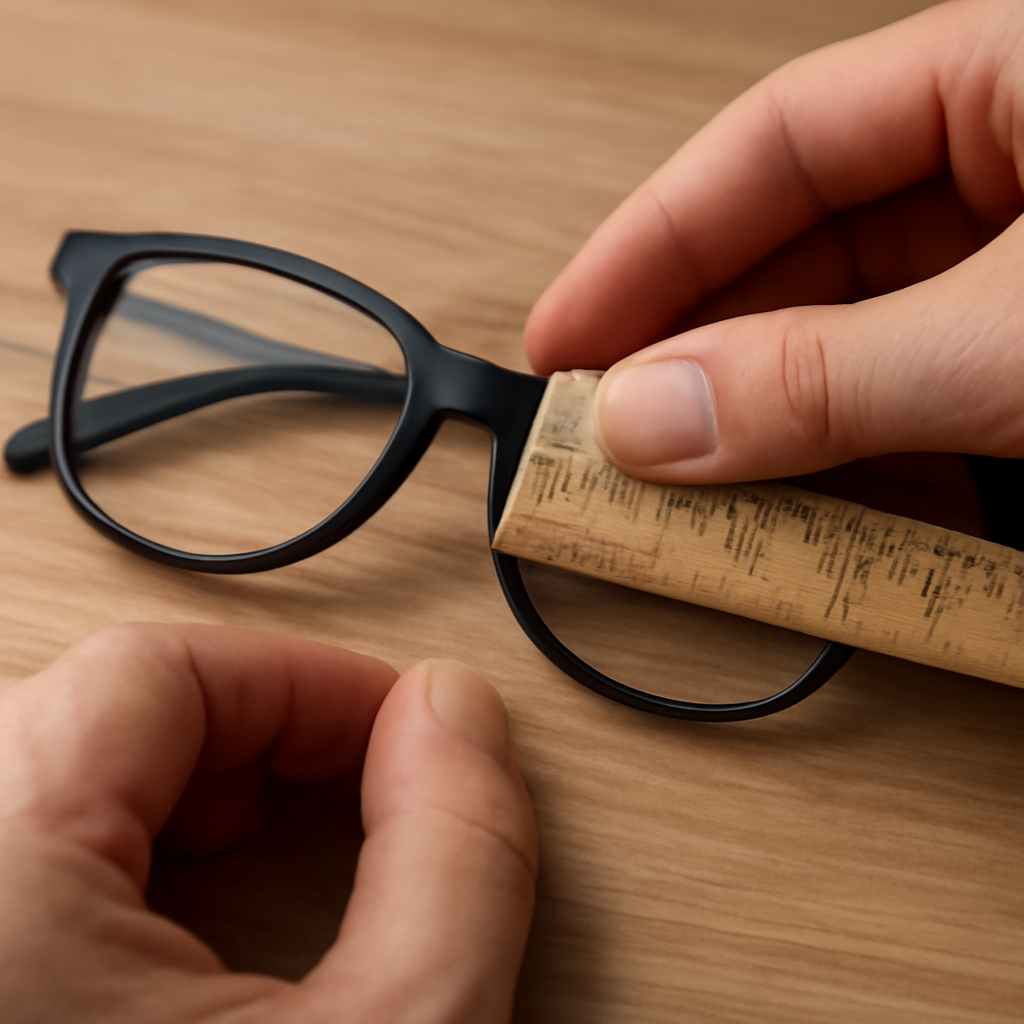
Grab a flexible ruler or a piece of string, place it at the outer edge of one cheekbone, stretch it across to the other side, and note the distance. Aim for a frame width that matches or is a couple of millimetres wider. If the frames feel tight, they’ll push the sides out; if they’re loose, they’ll slide down and lose that lifting effect.
The bridge is the little bridge between the lenses, and its shape decides where the glasses sit on your nose. A straight or slightly angled bridge lifts the frames higher, creating a vertical line that elongates the face. A rounded bridge tends to sit low and can make the cheeks look fuller, which defeats the purpose of adding definition.
Absolutely – colour is a secret weapon. Dark tones like deep tortoise, charcoal, or classic black add contrast and sharpen the silhouette. If you love a pop of colour, go for a subtle accent on the temples or a muted hue on the frame’s lower rim. The key is to keep the top edge neutral so it still frames your brows without overwhelming the look.
Yes, they do. Materials like thin‑metal titanium or ultra‑light acetate keep the glasses from feeling like a weight on your nose, especially during long Zoom calls or a busy day at the office. Light frames also reduce pressure on the temples, meaning you won’t end the day with a sore head or a slip‑down nose.
Do the “bridge‑and‑arm” test: hold the glasses up to a mirror, let the arms rest on your ears, and see if the frames stay level when you smile or move your head. If they dip or slide, the bridge is too narrow or the nose pads need a tiny adjustment. A quick tweak with a soft‑silicone pad can make all the difference.
Definitely. A good pair of polarized prescription sunglasses with an angular frame gives the same lift while protecting your eyes. Look for styles that mirror the rectangular or square frames you’ve tried – the same geometry works, just with tinted lenses. That way you keep the visual balance year‑round, whether you’re on a sunny beach or driving through the city.